The United Nations holds primary responsibility for maintaining international peace and security. Nevertheless, despite decades of intervention, the Western model of democratic institutionalisation has not consistently produced the anticipated outcomes in post-conflict states, particularly across the African continent. This perceived inadequacy contributed to the use of regional alliances as an alternative approach on several occasions. Consequently, regional alliances and organisations have been advanced as alternative mechanisms in numerous instances. However, regional alliances often struggle to generate coherent, sustained responses because member states prioritise competing national interests and divergent strategic objectives over collective operational goals. This article, which I wrote for Diplomatic Knots, examines why shared operational objectives often do not necessarily yield coherent strategic outcomes.
Background
Since World War II, the international community has had eight decades of a checkered history of successes and failures in efforts to save humanity from the scourge of war. The current world order, whose flagship organisation is the United Nations, founded to maintain international peace and security, was influenced by Western dominance. Therefore, its support for peace has largely followed the Western style of democratic institutionalisation for nations recovering from conflict. This model, however, has mostly failed, especially in African regions, where conflicts continue even after so many years, for several reasons. Failures of direct intervention by external forces prompted African leaders like Kwame Nkrumah, Ghana’s first president, to look for alternatives to meet these challenges. He felt that the problems facing Africa were, and still are, unique and could be best managed by Africans freeing themselves from the lingering grip of colonialism. That is how the idea behind the phrase African solutions to African problems (ASTAP) was conceived. The phrase itself was coined by the Ghanaian economist George Ayittey after the Somalia crisis (1993) and the Rwan dan Genocide (1994). Ayittey believed that Africans’ continued reliance on Western tools, such as external intervention to restore peace and developmental assistance from the Bretton Woods institutions, did not work. Therefore, Africans needed to move away from imported Western models to solve African problems. This is not to say the West's intentions were not noble. But it did not translate into a good, workable solution.
This philosophy was codified in 2002 when the Organisation of African Unity (OAU) transitioned into the African Union (AU). The AU’s vision is “An Integrated, Prosperous and Peaceful Africa, driven by its own citizens and representing a dynamic force in the global arena.” Authorised by Article 4(h), the AU is empowered to intervene in a member state in cases of war crimes, genocide, and crimes against humanity. Necessary structural changes took place to operationalise the philosophy. Examples of where this philosophy was tested include the Economic Community of West African States (ECOWAS) in Gambia and Sierra Leone; the African Union Mission in Somalia (AMISOM, later ATMIS), deployed in 2007 after the UN withdrawal in 1995; and the AU–UN Hybrid Operation in Darfur (UNAMID). In this context, Wilson Mokete Makgalancheche had recommended that Africans must unite to redeem their image and take ownership of their problems.
This regional security arrangement aligns with Chapter VIII of the UN Charter (Articles 52-54). With a UNSC resolution, regional involvement has stronger legal teeth. However, practical dynamics and challenges shape the UN-AU relation ship. While they complement each other, severe structural and financial limitations, along with coordination challenges, remain. The most glaring challenge is the rivalry and tension between the two institutions.
However, ultimately, the regional organisation remains responsible for operationalising the mandate, regardless of whether the UNSC authorises a regional arrangement. The challenges of making such an alliance arrangement work don’t go away just because the UNSC.
authorises it. Beyond what is mentioned above, some elite African leaders benefited from the continuation of conflict, which strengthened after the exit of colonial powers.
The Limits of Regional Conflict Management
When Ayittey developed the idea for a regional solution, he suggested forming an alliance of nations with shared griev ances to fight for their cause. Even Kofi Annan actively popularised the idea that African problems rest with Africans themselves. However, regional conflict management has limits. This is best understood by looking at two cases – Somalia and DRC, followed by examining a new alliance forming in the Horn of Africa.
Somalia
Somalia operates as a federal parliamentary republic, with power shared between the centre and the federal states. While the President is the head of state, holds executive authority, and is the commander-in-chief of the armed forces, the Prime Minister is the head of government, supported by the Council of Ministers. There are six federal member states, including Jubaland, and two administrative entities (including Somaliland, which declared independence on 18 May 1991 and remains unrecognised except by Israel). The federal member states maintain their own security forces and administration. Since 2007, three AU missions have been deployed. The first mission was AMISOM, later rebranded as the African Union Transition Mission in Somalia (ATMIS), and finally the African Union Support and Stabilisation Mission in Somalia (AUSSOM). AUSSOM was meant to be the test case for AU-led missions receiving up to 75% of their funding from the UN, but that model has not been applied, and the mission still depends on voluntary contributions. AUSSOM is facing an existential crisis, and Somalia is grappling with terrorism, a humanitarian crisis and security col lapse. Clanism is deeply embedded in Somali society and politics. Besides, Somalis take pride in their Islamic identity.
Democratic Republic of Congo
The DRC has endured years of instability and two Congo wars. The second, the Great African War, which ravaged the country with humanitarian catastrophe, began in 1998 and ended in 2003; the 2006 election formally ended the political transition. The First Congo War (1996-1997) began in the wake of the Rwandan Genocide in 1994, followed by Tutsis returning to power and a Tutsi-led Rwandan government invading Congo (then called Zaire) with the help of Uganda, Angola and Burundi. The First Congo War ended when Mobutu Sese Seko, Zaire's sitting dictator, fled and was replaced by opposition leader Laurent Kabila, who renamed the country the DRC. However, after relations between Kabila and Paul Kagame, Rwanda's leader, deteriorated, the Second Congo War broke out in 1998. But the alliance reversed, and Angola, which earlier supported Rwanda, now joined hands with Kabila. Congolese forces supported by Angola, Namibia, and Zimbabwe fought against Rwandan, Ugandan, and Burundian armed forces.
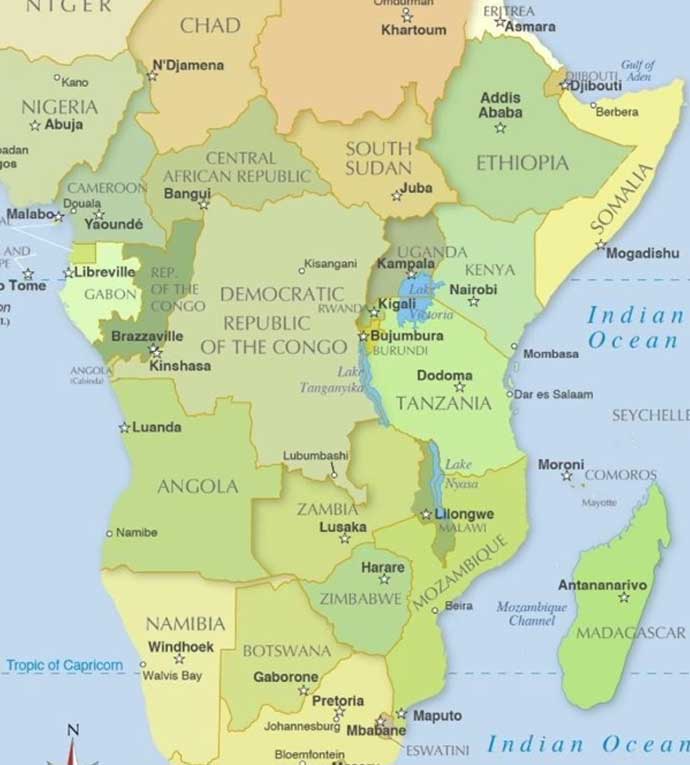
During the Second Congo War, at the DRC's request, the United Nations Organisation Mission in the Democratic Re public of the Congo (MONUC) was deployed (UNSCR 1279 of 30 November 1999). Kabila was assassinated in 2001, and his son, Joseph Kabila, took power; the war ended with peace agreements involving Rwanda, Uganda and the DRC. MONUC was later replaced by the UN Organisation Stabilisation Mission in the DRC (MONUSCO) on 1 July 2010. However, with different armed groups fighting for their turf, the DRC is currently facing significant challenges. The most active and potent group is the Rwanda-backed March 23 Movement (M23). This group has virtually taken control of eastern DRC.
Alliances of convenience rarely cohere
Case of Somalia and DRC
Somalia
The reasons for the failure of regional alliances differ between Somalia and DRC. After the UN withdrew, the East African leaders failed to provide a true alternative in Somalia. Somalia shows how external forces that disregard local cultural sensitivities compound the domestic political crisis by imposing a Western model to stabilise the country. The involvement of Djibouti, Egypt, Ethiopia, Kenya, and Uganda is driven by immediate shared security interests centred on counterterrorism against Al-Shabaab, but with varying strategic objectives.
Ethiopia seeks access to the Red Sea; Egypt wants to limit Ethiopia’s regional influence and use the Red Sea as leverage over Ethiopia’s Grand Ethiopian Renaissance Dam (GERD). Uganda does not share a border with Somalia but wants to project power as a regional stabiliser and sometimes tries to broker peace between Ethiopia and Eritrea. Regional neighbours like Kenya and Ethiopia have often viewed Somalia as a threat and justified their intervention by describing it as a failed state.
Kenya’s interest in Somalia lies in creating a security buffer along its northeast border with Jubaland, a federal state of Somalia along the coast of the Indian Ocean. Positioning its armed forces in Jubaland helps Kenya assert control over Al-Shabaab and gain easier access to the port city of Kismayo. The need to assert control over Al-Shabaab is a shared interest of Kenya and Somalia. However, Kenya’s direct dealings with the Jubaland administration are considered an infringement of Somalia’s sovereignty by the current Somali leadership.
When competing for strategic objectives, alliance members sometimes enter bilateral arrangements to access resources. As seen in peacekeeping operations deployed in Africa, beyond constraints of limited resources and institutional capacity, alliance members often clash over strategic objectives, compromising the regional response. Besides disregarding Somalis’ Islamic identity and its tradition of clanism, the external actors prioritised regional geopolitical rivalries over moving against Al-Shabaab. Somalia is a case of negative compounding effects of external involvement in a domestic political crisis.
DRC
The DRC exhibits the clash between the alliance's strategic objectives and member states' operational objectives. Rwanda wanted to destroy and disrupt militia groups and create a buffer zone on its border; Uganda wanted to secure its border against Ugandan rebels like the ADF operating from the DRC and wanted to retain its regional influence; Burundi aimed to prevent cross-border insurgencies, and Angola wanted to deny sanctuaries to UNITA rebels. Their immediate shared objective in the First Congo War was to remove Mobutu, and they succeeded. In the Second Congo War, Zimbabwe, which projected itself as a regional leader and protected its commercial investment, and Namibia, which honoured its SADC obligations, joined Angola on Kinshasa’s side. But as the conflict evolved, their strategy shifted from direct conflict to a proxy war. Their strategic objectives were always to remain regionally influential and to entrench control over the DRC's rich resources.
Laurent Kabila's invitation to the pro-Kinshasa forces legitimised their intervention to extract rich minerals under the guise of supporting the government against rebel forces. Hence, switching sides in the Congolese wars was only an operational necessity. External actors have further compounded the situation through the DRC's domestic policies. The US and China are now contesting for Africa’s minerals. While China has monopolised mineral extraction and leveraged infrastructure, the US is trying to counterbalance Chinese influence. It is in the US's interest to have a hiatus in the conflict because some of the mineral sites covered by its December 2025 agreement with the DRC lie in the war zone. Meanwhile, Congolese President Tshisekedi is benefiting by pitting the US and China against each other and is now seeking Russian support to fight M23. Even former President Joseph Kabila, who once fought M23, resurfaced in Goma and in October 2026 assumed leadership of the Front for the Refoundation of the Nation (FRN), the new political-military coalition succeeding the M23 alliance. Millions of civilians have died in the DRC so far, and MONUSCO is trapped in the conflict with its hands tied behind its back. While the DRC is trying to survive, another alliance has emerged in the Horn of Africa. Somalia is an integral part of the Horn, so problems in Somalia are closely related to those of the Horn.
Horn of Africa
On 4 October 2026, at a summit in El Alamein, Egypt, Eritrea, Sudan, and Somalia formed a loose alliance driven by their shared interest in constraining Ethiopia and preventing it from becoming a powerful regional player that could force geopolitical shifts against their interests. The summit came amid renewed war in Tigray, where Ethiopia accuses Egypt, Eritrea and Sudan of backing the TPLF, which they deny. Constraining Ethiopia by building diplomatic and military pressure from the periphery is not a strategic objective. It is the operational plan to achieve their (four nations') strategic objectives, which vary. For example, as illustrated by Al- Saeed, Egypt wants to preserve its leverage over the operation of the GERD and prevent Ethiopia from becoming the regional leader. At the same time, a full-fledged war between Ethiopia and Eritrea, which is brewing, does not help to achieve its aim. Similarly, Sudan’s main objective is to remain in power during the civil war and, therefore, pressure Ethiopia not to support Sudan’s adversaries. On the other hand, if a war breaks out, refugee movement and armed transit would create a new challenge to deal with. Likewise, Somalia seeks support for its territorial integrity. Therefore, a full-fledged war between Ethiopia and Eritrea is not in the interest of any of the members of the alliance. At the same time, Ethiopia’s victory will help position it as an emerging power not only in the Horn but across Africa.
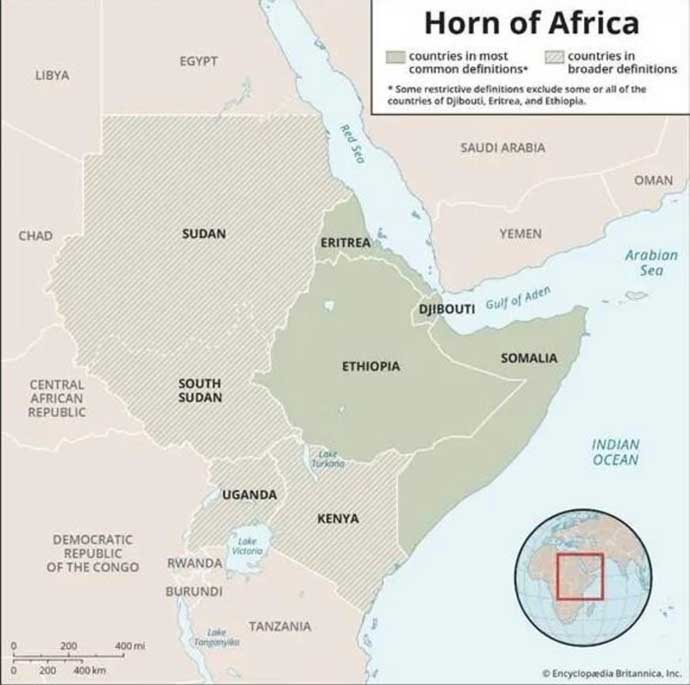
Ethiopia is at the centre of the alliance’s immediate collective aim to constrain it. However, if such an alliance converges into a military intervention, their strategic objectives are likely to clash, exposing the alliance's vulnerability. Despite their different strategic interests, all alliance members have come together with the immediate aim of constraining Ethiopia. Ethiopia cannot prevent the alliance from converging. Allying is not a strategic but an operational approach to constrain Ethiopia. If constraining Ethiopia through the alliance fails, the next step will be military intervention. Ethiopian and Eritrean forces clashed near the border town of Badme in mid-November 2026. But whether an all-out war breaks out depends heavily on how the alliance responds.
Alliances of Convenience: The Fragility of Shared Strategic Objectives
Limitations of alliances are not confined to international relations. For instance, Wilen argues that “The different external interventions in the Sahel – albeit with different goals – have contributed to an increasingly militarised form of conflict management.” Similarly, opposition political parties in a multi-party democracy come together to unseat the party in power. Once that happens, squabbling begins, with each side looking for its share of the pie. That is when the party that lost power looks for vulnerability in the united opposition, and plays them off against each other by buying and selling to return to power. In the Sahel, the stated goal is to fight terrorism and restore stability. The real goal for each intervener was to secure its own bases, gain access to rich minerals like gold, and control migration.
In international relations, coalition posturing with force might coerce a nation. But crossing the bar of restraint and using military power beyond a point might clash with each member's strategic objectives and create friction. By exploiting the coalition's weakness, a coerced and invaded state could force the alliance to realign, bring one or more members to its side, and ultimately fracture it. Thereafter, the invaded state can pursue a fracturing strategy by overextending the enemy. This is precisely why NATO and the EU are visibly strained. Both the Ukraine and Gaza wars have exposed the vulnerability of their coalition. For similar reasons, the Mecca Pact, the joint defence agreement signed by Saudi Arabia, Turkiye and Pakistan in August 2026, might not work.
This is not to claim complete failure of alliances. They have worked but have not delivered the expected results because of the internal dynamics of member states and their foreign-policy priorities. An alliance's survival does not depend solely on the absence of constraints, such as limited capacity. To endure, it should go beyond security arrangements and military partnerships. Greater economic interdependence, trade, infrastructure development and people-to-people contact could create stronger incentives for neighbouring countries to maintain peace. Reliance only on military muscle to realise the shared objectives can be counterproductive. Hence, alliances must also learn the difficult calculus of restraint rather than force. An alliance or coalition of the willing is a temporary solution to the ineffective or paralysed UN intervention. If alliances cannot deliver and the UN’s intervention is not effective, what can be relied on to manage the conflict? In the absence of any other alternative, the UN has still performed comparatively better, at least in terms of creating a sense of negative peace, during its stay in the conflict zone. If the international community agrees on the indispensable role of the UN, what form it should take is still being discussed worldwide. Regardless of whatever form it takes, addressing the root causes of insecurity by reducing poverty, promoting equality, and investing in health and climate initiatives must be at its centre.